

It was a video call with someone back home in the US.
Nothing unusual — just a regular Sunday check-in.
My cousin was telling me about a job transition he’d made.
An update on his relationship.
Something about the neighborhood changing.
I was listening. Genuinely.
And then, mid-conversation, a thought landed quietly:
I have no idea what you’re talking about anymore.
Not because he wasn’t clear.
Because I wasn’t there to feel the ground shift under my own feet.
When I first moved to Spain in 2010, everything was adaptation.
I was learning how to plug in — except all my plugs were different.
Two linear prongs instead of two rounded ones.
I needed an adapter for everything.
The supermarket.
The metro.
The way people greeted each other.
The language.
The rhythm of life itself.
It felt clunky.
Uncoordinated.
Exhausting.
But I learned.
Over the years, I built muscle memory.
The adapter became less visible.
I developed ease in spaces that once felt foreign.
I made friends who felt like home.
I built a business, a rhythm, a life that looked settled —
to others, and sometimes even to me.
And then I went back to visit.
The first thing I noticed wasn’t the joy of return.
It was the not-quite-home-ness of it all.
My family’s three-pronged outlets had changed shape.
Society had moved.
Conversations had evolved.
Inside jokes had calcified into traditions I wasn’t part of anymore.
The rhythm I’d learned when I left no longer matched the rhythm they were living.
They’d all continued.
I’d paused — and restarted somewhere else.
Trying to plug in felt like wearing someone else’s skin.
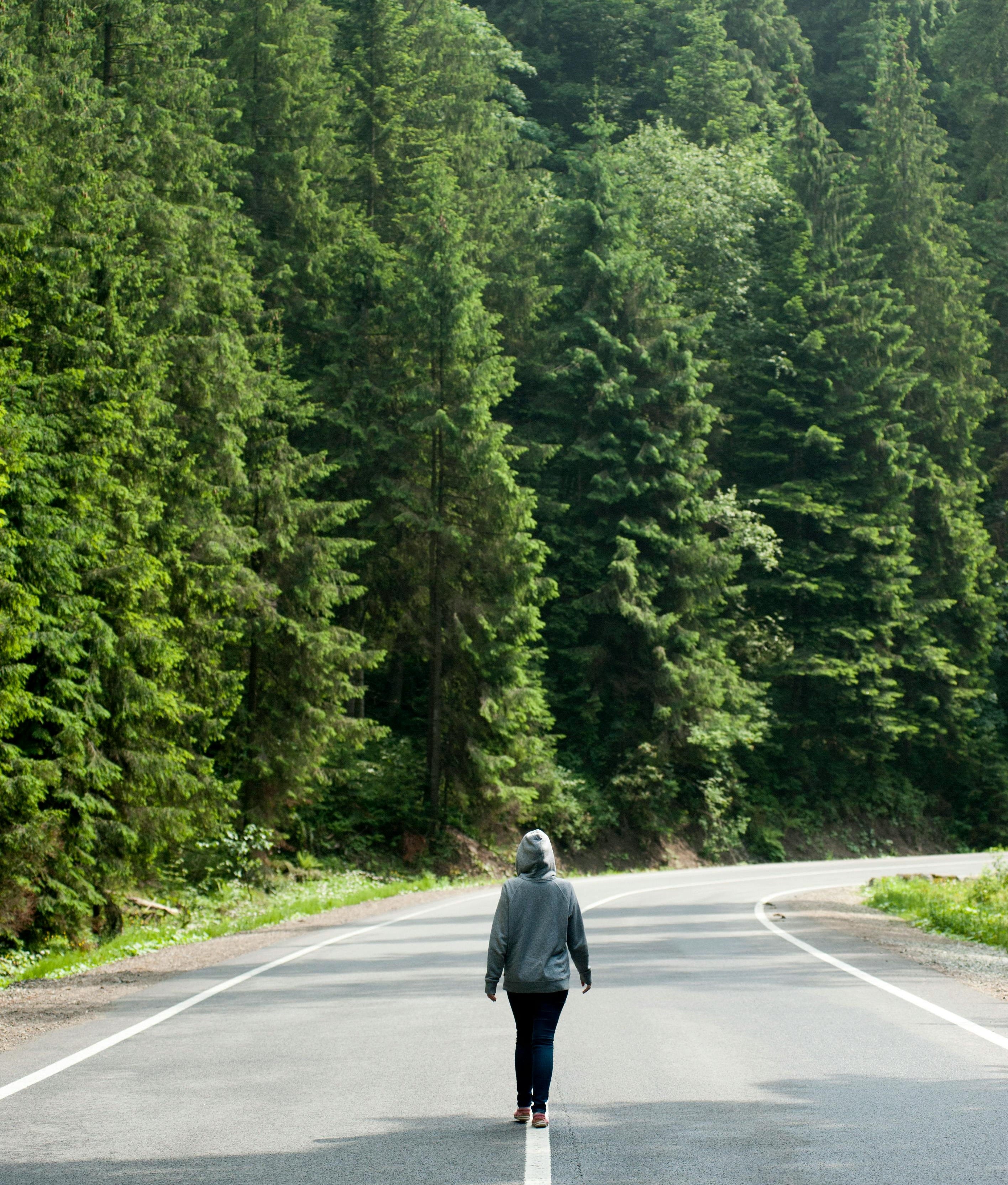
This is the grief that doesn’t make sense to anyone who hasn’t lived it.
It’s not dramatic.
It’s not a breakdown.
It’s the slow, quiet realization that home is a place you can no longer fully inhabit.
That you’ve become someone the people who knew you first don’t quite recognize.
That there’s a version of your life —
promotions, relationships, cultural moments, neighborhood changes —
that happened without you.
And you can’t catch up…
because you were busy building a different version somewhere else.

During the pandemic, this edge became even more visible.
For those already living between countries, cultures, and identities,
the upheaval hit differently.
The world narrowed.
Communities fractured.
I remember navigating spaces — a supermarket, a bus —
places I used to move through with ease,
suddenly feeling watched, uncertain, invisible in a different way.
The ground shifted in ways that didn’t fit neatly into anyone else’s narrative.
Here’s what I want you to know:
This is the edge most expat content doesn’t prepare you for.
Not the beginning — that part’s been covered.
Visas. Apartments. Language apps.
But what happens after?
When you’ve stopped being a foreigner
and haven’t become fully local.
When you’re building something real and meaningful,
and the ground shifts anyway.
When home becomes a word
that doesn’t quite describe anywhere.
This is why I’m starting Edgewalkers Collective.
For years, I did professional work around inclusion and identity in distributed teams.
I helped organizations navigate complexity across borders.
But I was avoiding a quieter truth.
I hadn’t fully processed my own edges.
I was advising others through transitions
I hadn’t named for myself.
Starting my CPCAB Level 2 counselling training this month feels like coming home to a question I’ve been carrying my whole life.
I’m not here to fix this feeling.
Or teach you how to “integrate” better.
I’m here because I believe this edge —
this not-quite-here and not-quite-there —
isn’t a failure of adaptation.
It’s a specific kind of grief.
It’s a specific kind of belonging.
And it deserves language.

In this space, we’ll explore what it means to live on this edge.
Not to resolve it.
Not to move past it.
But to stay with it.
To notice what emerges
when we stop pretending we should be fine by now.
You’re welcome here if you’re quietly nodding at any of this.
If the plugs don’t fit anymore.
If you’re rebuilding on the other side of upheaval.
If you’re learning to belong in a different way.
I’m still tender with all of this too.
Still grieving.
Still building.
But I’m here.
And so are you.
Let’s walk the edges together.
Onward,
Kay ✨
If you’d like to go further
Tell me about your in-between in the comments. (I read every one — and I suspect the rest of us will recognize ourselves in your story.)
And if walking these edges feel challenging right now, you don’t have to map it alone.
Sometimes it helps to have that experience witnessed; you don’t have to make sense of it alone:
I hold a small number of Expat Orientation Conversations each month — 60‑minute, one‑to‑one, non‑clinical sessions for sense‑making and orientation, not therapy or coaching.
Together we look at how long‑term life abroad may be shaping your inner experience, find language for what has been hard to name, and gently sort what’s contextual from what’s personal before you decide what, if anything, you want to do next.
Let’s keep walking the edges together.
Onward,
Kay✨
Who’s behind Edgewalkers Collective?
I’m Kay — Filipina American TCK (Third Culture Kid), 17 years in Spain, and a counsellor‑in‑training (CPCAB, UK). I spent over a decade working in inclusion and cross‑cultural strategy, helping organizations bridge cultures. I was good at it. I was also quietly burning out from being the bridge. Now I’m training to offer something different: recognition‑based support for expats and global citizens who are done being told they should feel lucky to be here.
If you’d like a sense of what working together could look like, you can read more on the Work With Me page.
If you want to access to the guided audios and quarterly pattern reports from my long-term life abroad research I send to paid subscribers, you‘re welcome to upgrade your subscription at any time.
Kay, thank you for this.
Have your heard of the Japanese fairy tale Urashima Taro? You are like that boy. Me too.
Take care,
Hans
Yes! I am here for this kind of community!